



-
Co-creative development
-
Precision at scale
-
European Production


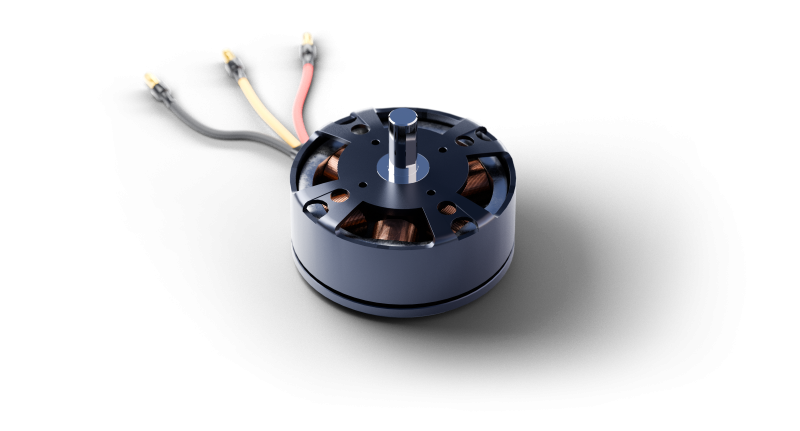
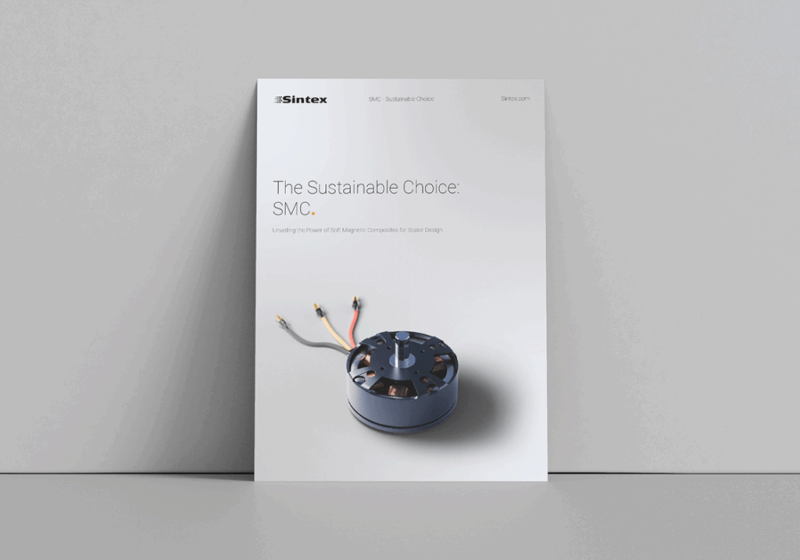
Stator design is one of the interesting applications for Soft Magnetic Composites (SMC). With the right design, one could potentially make a cheaper, smaller and more efficient motor. When using SMC for a stator, it is important to utilize its unique geometrical possibilities in order to get the desired benefits.
Replacing a stator in laminated steel with an identical one in SMC is normally not recommended, but the latest report from IHS Markit on shortage risk for electrical steel can make this a fast 1st generation solution to mitigate the supply chain risk described.
The shortage is caused by the strong growth in electrification of transportation – a growth rate that cannot be followed by the existing steel mills supplying the electrical steels for the stators. The large OEM companies will be served first which leaves the smaller motor producers to find alternative solutions. One of these could be SMC.
The 1st generation is a quick fix and it will always be preferable to shape SMC in all three dimensions, which is not possible with laminates. In the following example, a 2nd generation stator previously made in 0.5 mm laminated iron is transferred into a SMC stator based on the material STX B7X. The stator design is similar except the stator bridge has been shortened and rounded as can be seen on the drawing below.
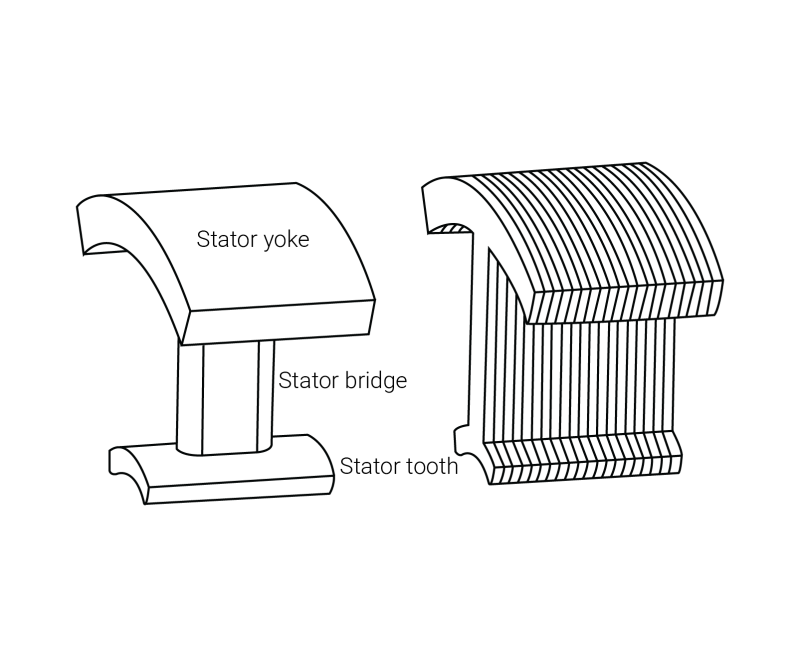
Basic motor specification:
• Stator outer diameter: 80 mm
• Stator length: 20 mm
• Stator teeth: 6
• Rotor outer diameter: 28 mm
• Ferrit-Rotor
• Poles: 4
By utilizing the optimized shape, it is possible to use less copper while maintaining the same number of windings.

If we look at the figure above, it is evident that the iron loss will be slightly higher for SMC compared to laminated iron, but the copper loss is significantly lower when using the optimized SMC shape.
The outcome is a lower combined iron and copper loss resulting in a more efficient motor. It should be noted that the motor has injection molded ferrite magnets in the rotor, therefore the flux density in the stator is very low. The motor can also be optimized for lower loss and weight in the case with the laminated design.
By changing the original design with laminated steel into the SMC version with a reduced height of the bridge the stator weight itself will be reduced from 242 gram to 203 gram. Decreasing the length of the copper winding also has a cost saving aspect.
The total copper weight of the stator:
• Laminated version: 172.5 g
• SMC-version: 115.8 g
In this case the copper weight is reduced by more than 30%,
thereby lowering the material cost.
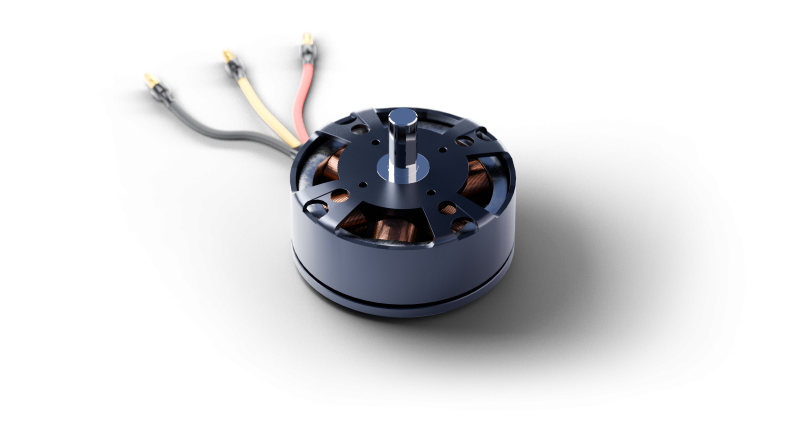
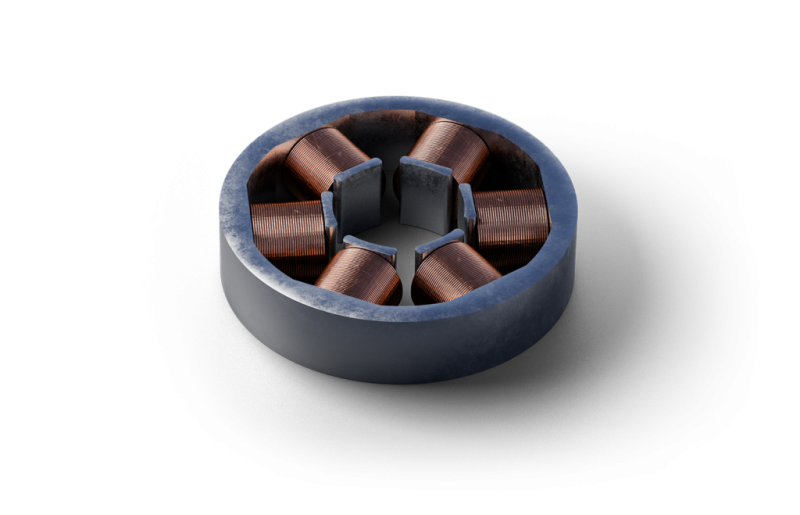
Due to the optimized shape, the end windings will protrude less beyond the stator with SMC (left) compared to laminated core (right) which makes it possible to decrease the volume and the weight of the entire motor even further.
With the right design, one could potentially benefit from
• a cheaper solution
• a smaller motor
• a lighter motor
• a more efficient motor
and not least a stable supply chain for your next generation stator.
If you would like to learn more, please contact us.
This site is protected by reCAPTCHA and the Google Privacy Policy and Terms of Service apply.
This site is protected by reCAPTCHA and the Google Privacy Policy and Terms of Service apply.
This site is protected by reCAPTCHA and the Google Privacy Policy and Terms of Service apply.