



-
Co-creative development
-
Precision at scale
-
European Production

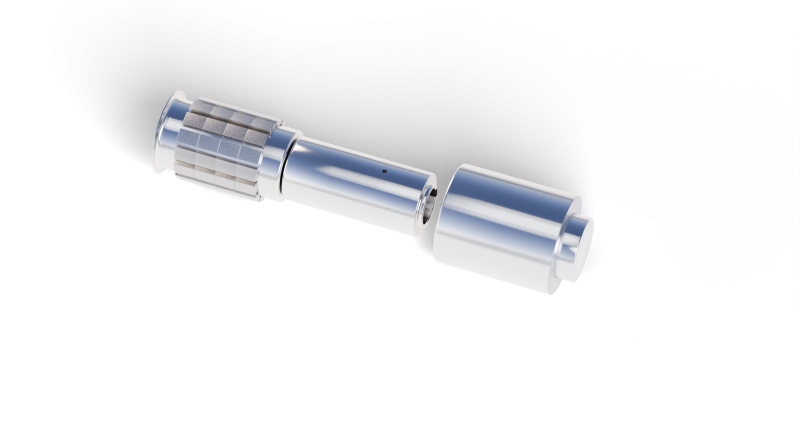
Mechanical sealings.
Dynamic seals are used when motion is transferred through a wall. This applies both to linear motion and/or rotating motion.
When the seals begin to wear out it can lead to leakage. This can lead to multiple problems, such as contamination of the batch, spillage of the fluid being moved, release of an unwanted substance in the surrounding atmosphere etc. A solution to avoid these problems is changing the seal preemptively before it becomes worn. However, this is rarely a cheap endeavor as it requires a full stop of the system.
Magnetic Contactless Power Transfer.
Using magnetic couplings, it is possible to transfer movement or torque without direct contact. Considering the magnetic repulsion and attraction principle, a magnetic coupling can transfer high amounts of torque through a non-magnetic insulation membrane. The insulation membrane is assembled with a stationary seal, which minimizes the wear. Alternatively, it can be welded directly to the pump or container resulting in complete sealing.

Based on the application and the nature of the required motion, magnetic couplings can roughly be split up into three categories, radial, axial and linear.
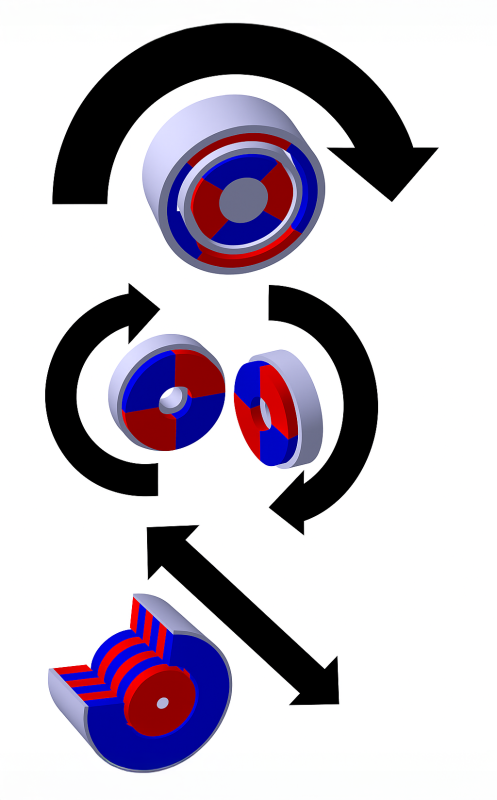
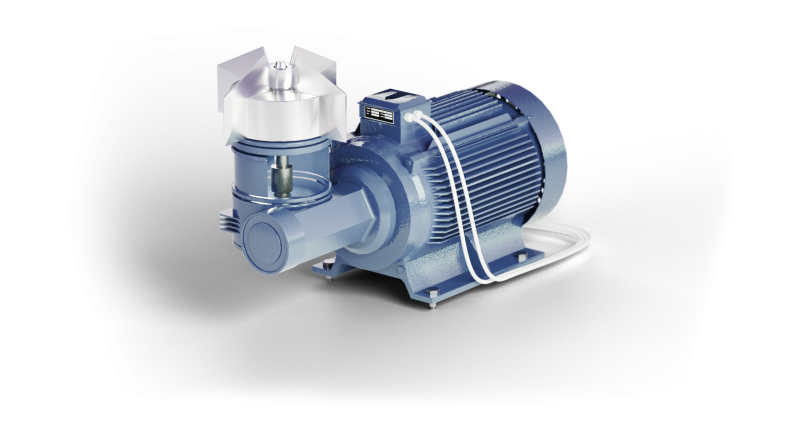
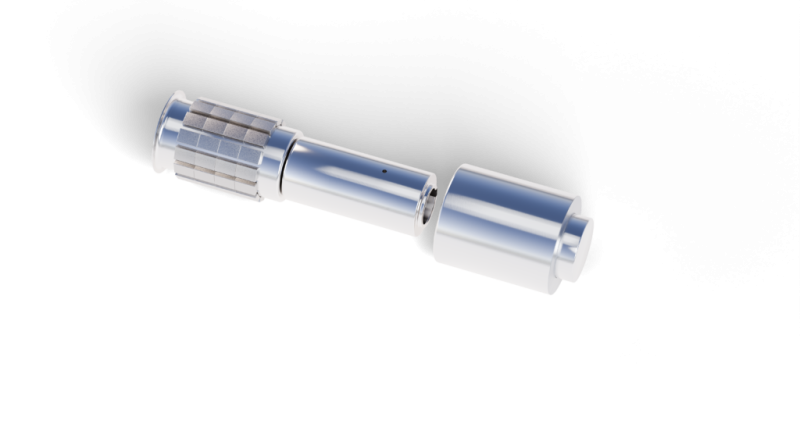
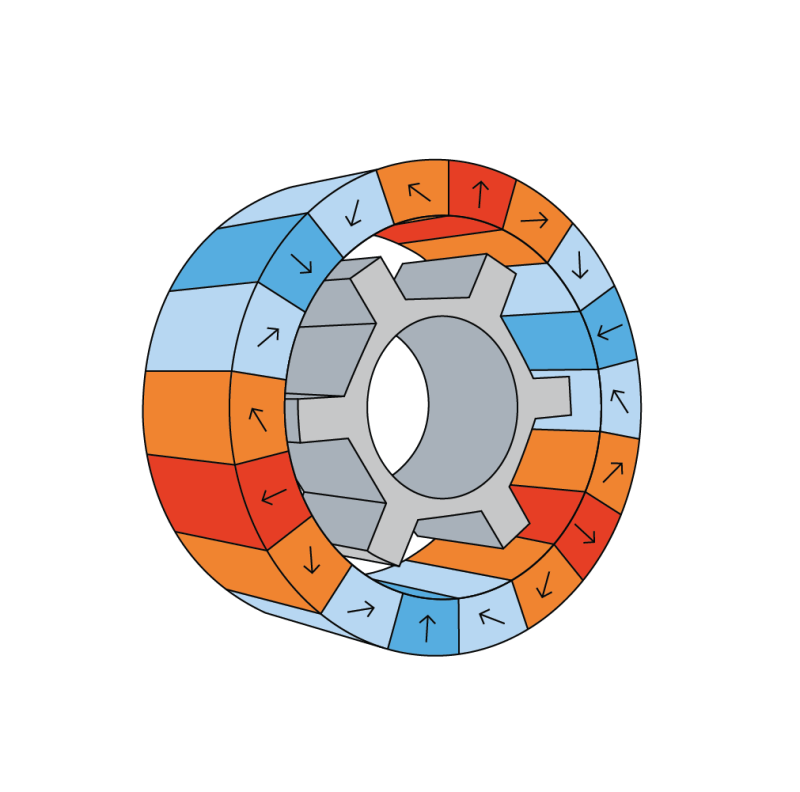
Out of the three solutions, radial couplings are used most frequently. With this solution the two drives are axially aligned and concentrically assembled with a static nonmagnetic wall. The principle is represented in the first figure above. This coupling can provide very high torque-transfer and is used to transfer rotational motion. The following picture shows such a system inside a GRUNDFOS pump.
The axial couplings are axially assembled and used to transfer rotational motion but installed facing each other with a separation wall in between the drives. Generally, lower torque values are transferred compared to radial coupling however on average this solution is more economical. The main disadvantage of this solutions is that high axial forces need to be overcome.
The last version shown, the linear coupling, is different compared to the other two solutions as it is used to transfer a linear translation motion. Instead of having the magnets radially alternations North – South, the linear couplings have the magnets axially alternating in polarity.
The development of such systems is done using the finite element analysis method, short FEA. Explicitly the system is simulated in a very precise manner, where variables as, torque, axial/radial forces, maximum temperature and others are determined and adjusted so that the most efficient coupling is designed and later produced.
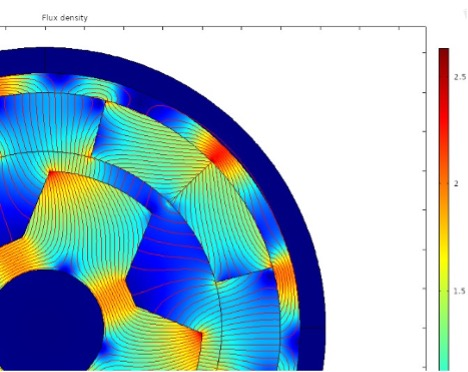
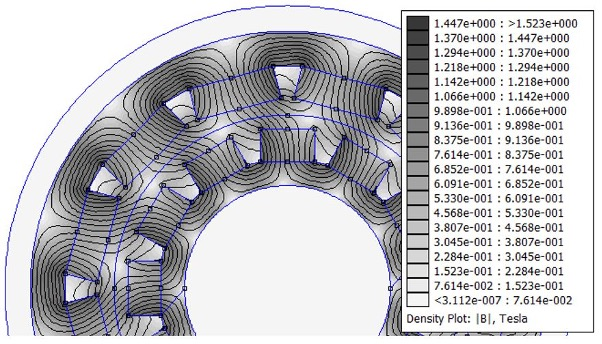
The simulations above were made using COMSOL Multiphysics.
With the right design, one could potentially benefit from…
… and not least a technological boost to your products, which can also have an impact on the bottom line!
This site is protected by reCAPTCHA and the Google Privacy Policy and Terms of Service apply.
This site is protected by reCAPTCHA and the Google Privacy Policy and Terms of Service apply.
This site is protected by reCAPTCHA and the Google Privacy Policy and Terms of Service apply.